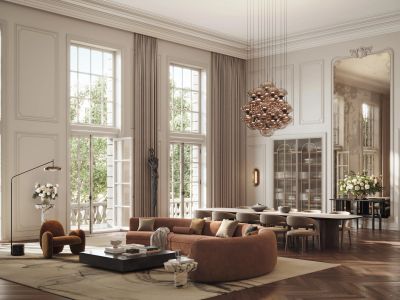
A05. Functional Luxury: Designing for the Way You Live
Why True Luxury Is Measured by How a Home Performs, Not How Expensive It Looks
Luxury Has Always Been Easy to See
For generations, luxury has been defined by what we can see. Grand entrances, handcrafted joinery, natural stone, bespoke furniture and carefully curated interiors have long been recognised as symbols of an exceptional home. These elements undoubtedly contribute to beauty, craftsmanship and lasting quality, but they describe only one dimension of luxury. They tell us how a home looks. They reveal very little about how it feels to live there every day.
A home may appear extraordinary in photographs yet prove surprisingly ordinary once everyday life begins. A magnificent kitchen may be inconvenient during a busy morning. A beautifully detailed wardrobe may never function as comfortably as expected. A formal living room may remain untouched because it was designed for admiration rather than use. None of these shortcomings are immediately visible, yet they shape daily experience far more profoundly than any luxurious material ever could.
Perhaps the way we define luxury deserves to evolve.
The Most Valuable Luxury Is the One You Experience Every Day
The finest homes rarely ask their owners to adapt to them.
Instead, they quietly adapt to the people who live within them.
Daily routines unfold naturally. Preparing breakfast feels intuitive rather than chaotic. Working from home, welcoming guests, finding a quiet moment to read or gathering as a family all happen without conscious effort because the home has been thoughtfully designed around real life rather than idealised images.
This quality cannot be purchased by specifying more expensive finishes or increasing the size of the house. It emerges from understanding people before designing spaces. It begins with thoughtful conversations about routines, relationships, aspirations and frustrations. Long before furniture is selected or materials are discussed, the most important question has already been asked:
"How should this home improve the way you live?"
Everything that follows should be an answer to that question.
Performance Gives Beauty Its Meaning
Beautiful interiors enrich our experience of home. Materials, craftsmanship, colour and proportion all influence the atmosphere of a space and deserve careful attention. Yet beauty becomes far more meaningful when it is supported by thoughtful performance rather than expected to compensate for its absence.
A home performs well when it quietly supports everyday life. Spaces feel intuitive because they have been carefully organised. Movement through the home feels natural rather than forced. Storage exists where it is genuinely needed. Natural light arrives where daily activities occur. Rooms remain relevant as families grow and routines evolve.
These qualities rarely attract immediate attention because they simply feel right.
That is precisely their value.
When a home performs beautifully, beauty is no longer something that is merely observed.
It becomes something that is consistently experienced.
The Finest Design Often Disappears into Everyday Life
One of the quiet paradoxes of exceptional homes is that their greatest achievements are often invisible.
Visitors may admire the architecture, the furniture or the craftsmanship, but the people who live there experience something far more valuable. They experience the absence of unnecessary effort. Everyday routines become easier without ever needing to think about why. The home supports rather than interrupts. It anticipates rather than reacts. Over time, its intelligence becomes so deeply embedded within daily life that it almost disappears.
Perhaps this is the highest expression of luxury.
Not a home that constantly reminds you how impressive it is.
But a home that allows you to forget about it altogether because everything simply works.
The greatest luxury is rarely spectacle.
It is ease.
Simplicity Is the Result of Extraordinary Thought
There is a common assumption that luxury becomes greater as homes become larger, more elaborate or filled with increasingly sophisticated features.
In reality, the opposite is often true.
The most refined homes possess a quiet confidence born from clarity rather than excess. Every room has a purpose. Every material has been selected with intention. Every detail contributes to a larger whole without competing for attention. Nothing feels unnecessary because every decision has earned its place.
Achieving this simplicity is remarkably demanding. It requires restraint, careful judgement and the discipline to remove anything that does not genuinely improve the experience of living. What appears effortless is usually the result of countless thoughtful decisions made long before construction begins.
Simplicity, in this sense, is not the absence of design.
It is the highest expression of it.
Functional Luxury Is a Philosophy, Not a Style
Functional Luxury is not defined by minimalism, classical architecture or contemporary interiors. It cannot be recognised by a particular colour palette or a specific collection of materials because it is not an aesthetic language.
It is a way of thinking.
It begins with the belief that every design decision should improve the way people live. It values purpose before appearance, long-term performance before short-term trends and thoughtful planning before visual spectacle. Beauty remains essential, but beauty is no longer treated as the destination. Instead, it becomes the natural consequence of decisions that have been guided by clarity, understanding and care.
This is why Functional Luxury can be expressed in many different architectural styles while remaining faithful to the same philosophy.
The appearance may change.
The principles do not.
Final Thoughts
Luxury has traditionally been measured by what a home contains.
Its size.
Its finishes.
Its materials.
Its craftsmanship.
All of these have their place, but they are only part of the story.
The homes that remain deeply satisfying over many years are rarely defined by what they display. They are defined by what they quietly enable. They support daily routines with ease, adapt gracefully as life evolves and create a sense of calm that extends far beyond aesthetics.
That is the essence of Functional Luxury.
It is the belief that true luxury is not measured by how impressive a home appears on the day it is completed, but by how beautifully it continues serving the people who live within it every single day.
Because the finest homes are not simply designed to be admired.
They are designed to be lived in.
Key Takeaways
- Functional Luxury™ is about improving everyday life through thoughtful design, not simply creating beautiful interiors.
- True luxury is experienced through comfort, clarity and effortless living rather than expensive materials alone.
- Homes should be designed around people, routines and long-term performance before aesthetics are considered.
- Simplicity is achieved through disciplined thinking and careful decision-making, not by removing detail.
- Functional Luxury™ is a design philosophy that places purpose before appearance and performance before trends.
Frequently Asked Questions
What is Functional Luxury™?
Functional Luxury™ is a design philosophy that combines thoughtful planning with refined aesthetics. It creates homes that are both beautiful and highly functional, improving the way people live every day.
How is Functional Luxury™ different from traditional luxury design?
Traditional luxury often emphasises visible features such as premium materials and bespoke finishes. Functional Luxury™ values these qualities but believes true luxury comes from how effortlessly a home supports everyday living.
Can Functional Luxury™ work in different design styles?
Yes. Functional Luxury™ is not a visual style such as modern, classical or minimalist. It is a way of thinking that can be expressed through many different architectural and interior styles.
Does Functional Luxury™ require a large budget?
No. While premium materials may enhance a project, the philosophy is based on thoughtful planning and intelligent decision-making. These principles can improve projects of many different sizes and budgets.
Why do some luxurious homes still feel uncomfortable?
Luxury finishes cannot compensate for poor planning. A home only feels truly luxurious when its layout, circulation, natural light, storage and everyday functionality have been thoughtfully resolved.
How does Functional Luxury™ influence the design process?
It begins by understanding how clients live, identifying what should improve in everyday life and allowing those insights to guide every design decision before discussing materials, finishes or furniture.
Related Insights
Explore the philosophy behind Functional Luxury: